What Is a Dry Van Trailer?
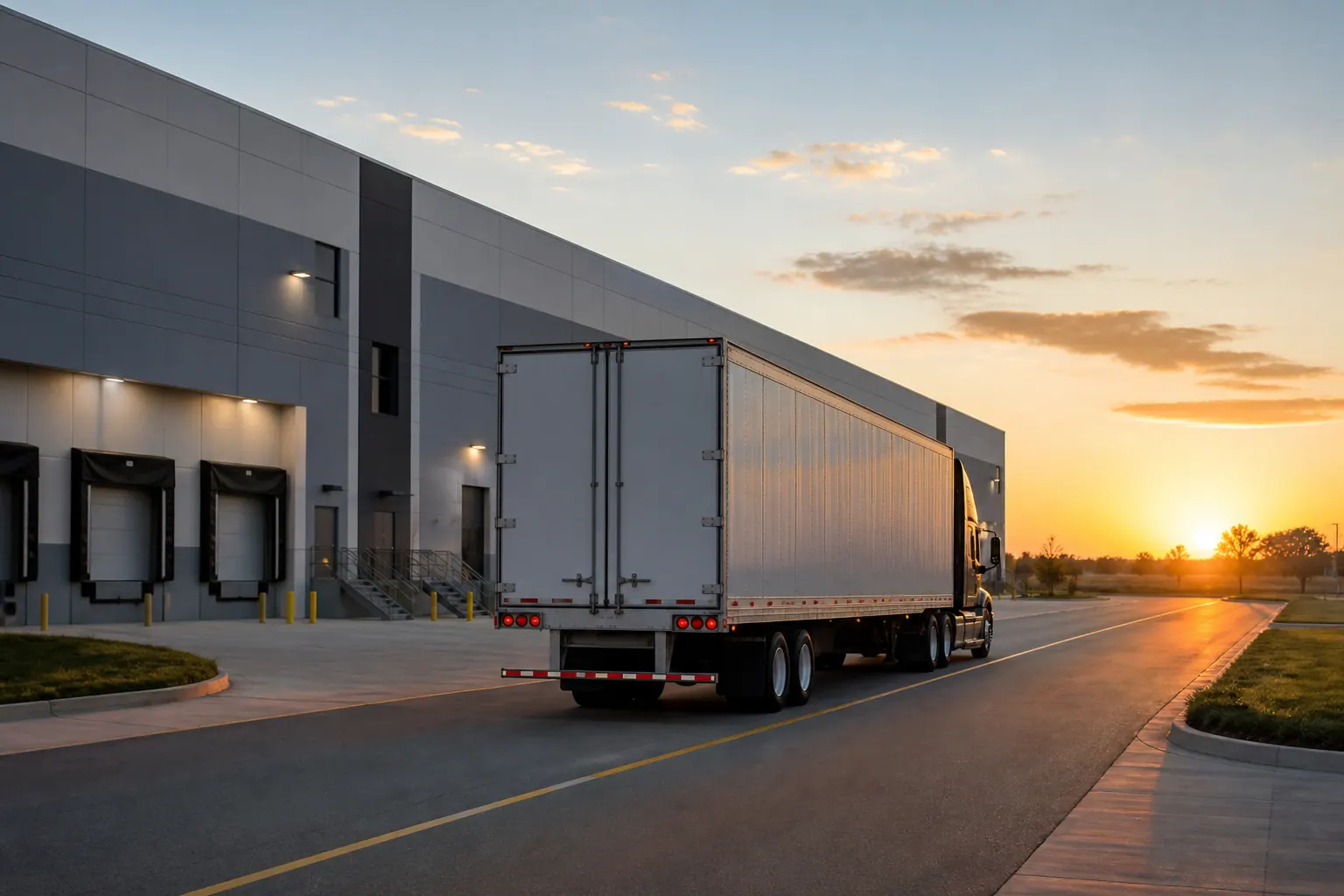
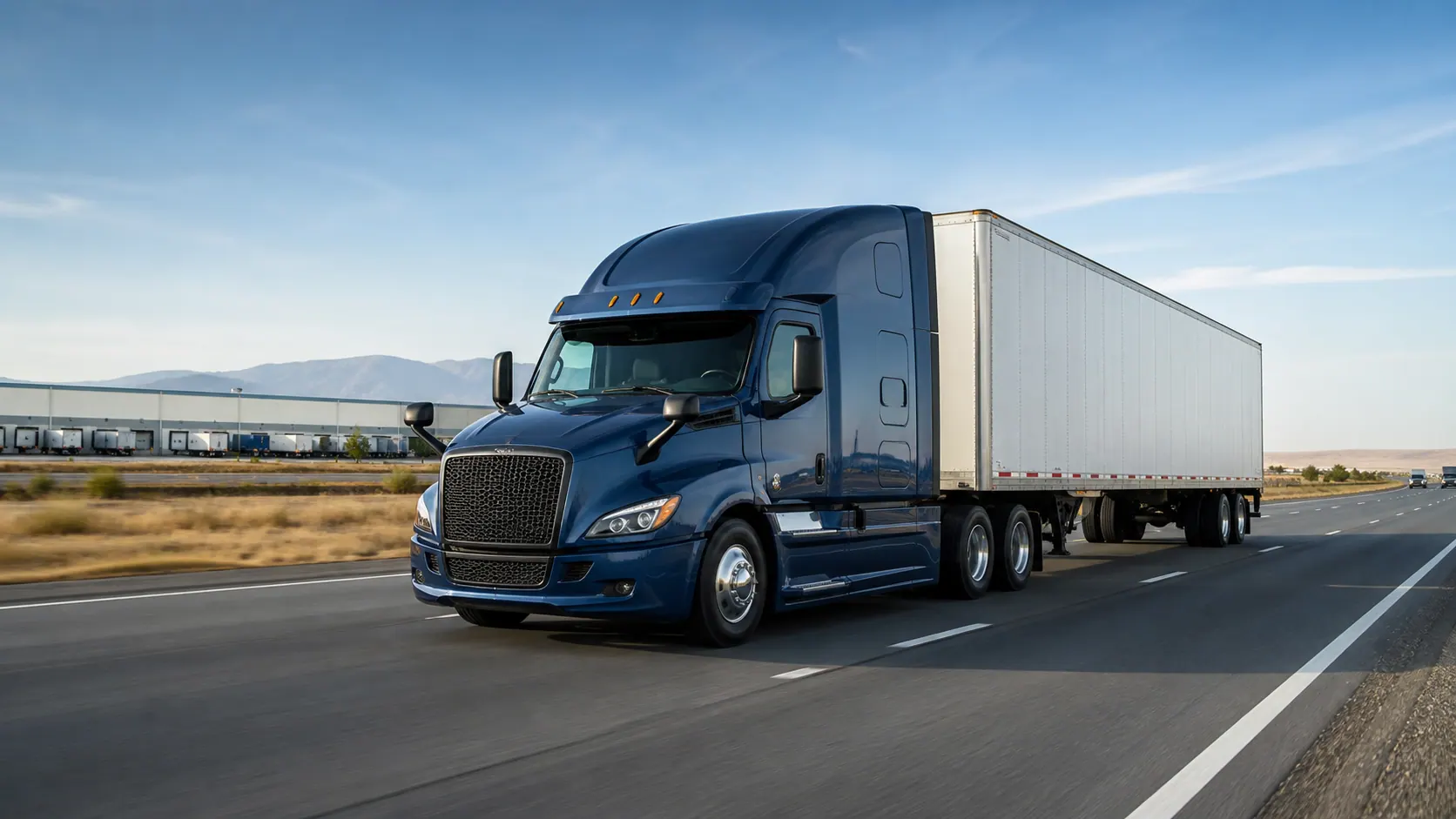
If you have spent any time on American highways, you have almost certainly seen a dry van trailer. These large, enclosed trailers pulled by semi-trucks are one of the most recognizable pieces of equipment in the U.S. trucking industry.
Dry vans are used to transport everything from clothing and electronics to packaged food, automotive parts, furniture, and industrial products. Because they can handle such a wide variety of freight, they are often one of the first trailer types new truck drivers learn to operate.
But what exactly is a dry van trailer, how does it work, and what kinds of freight can it carry?
This guide explains the basics every new or experienced truck driver should know.
What Is a Dry Van Trailer?
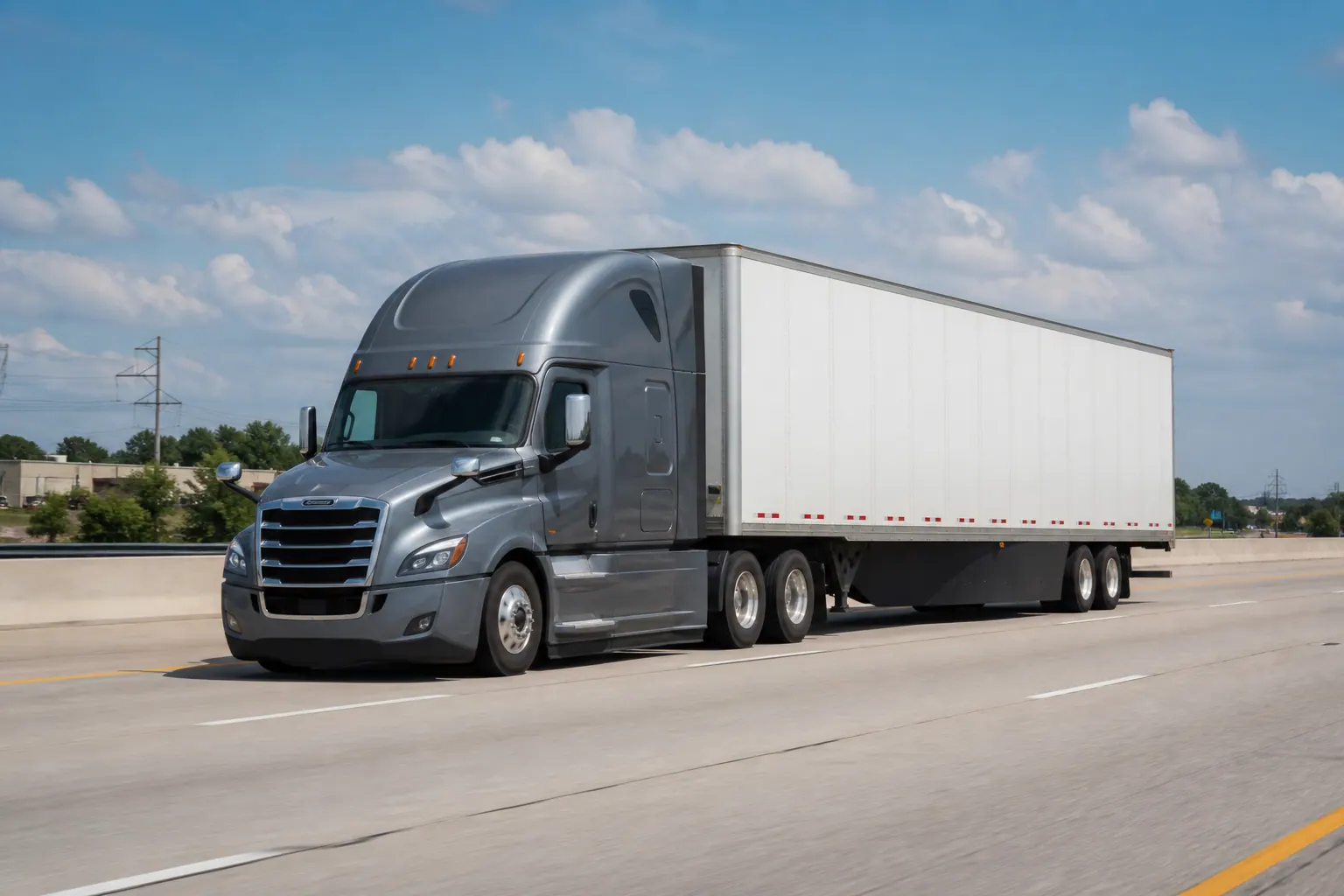
A dry van trailer is a fully enclosed, non-refrigerated semi-trailer designed to transport cargo that does not require temperature control.
It has:
- Solid walls
- A solid roof
- An enclosed cargo area
- A durable floor
- Rear loading doors
Unlike a flatbed trailer, the cargo is completely enclosed. Unlike a refrigerated or reefer trailer, a standard dry van does not have a refrigeration system.
The word "dry" refers to the trailer's ability to keep cargo protected from rain, snow, dirt, road debris, and other outside conditions.
Because of this simple and versatile design, dry vans are commonly used for general freight throughout the United States.
What Does a Dry Van Trailer Look Like?
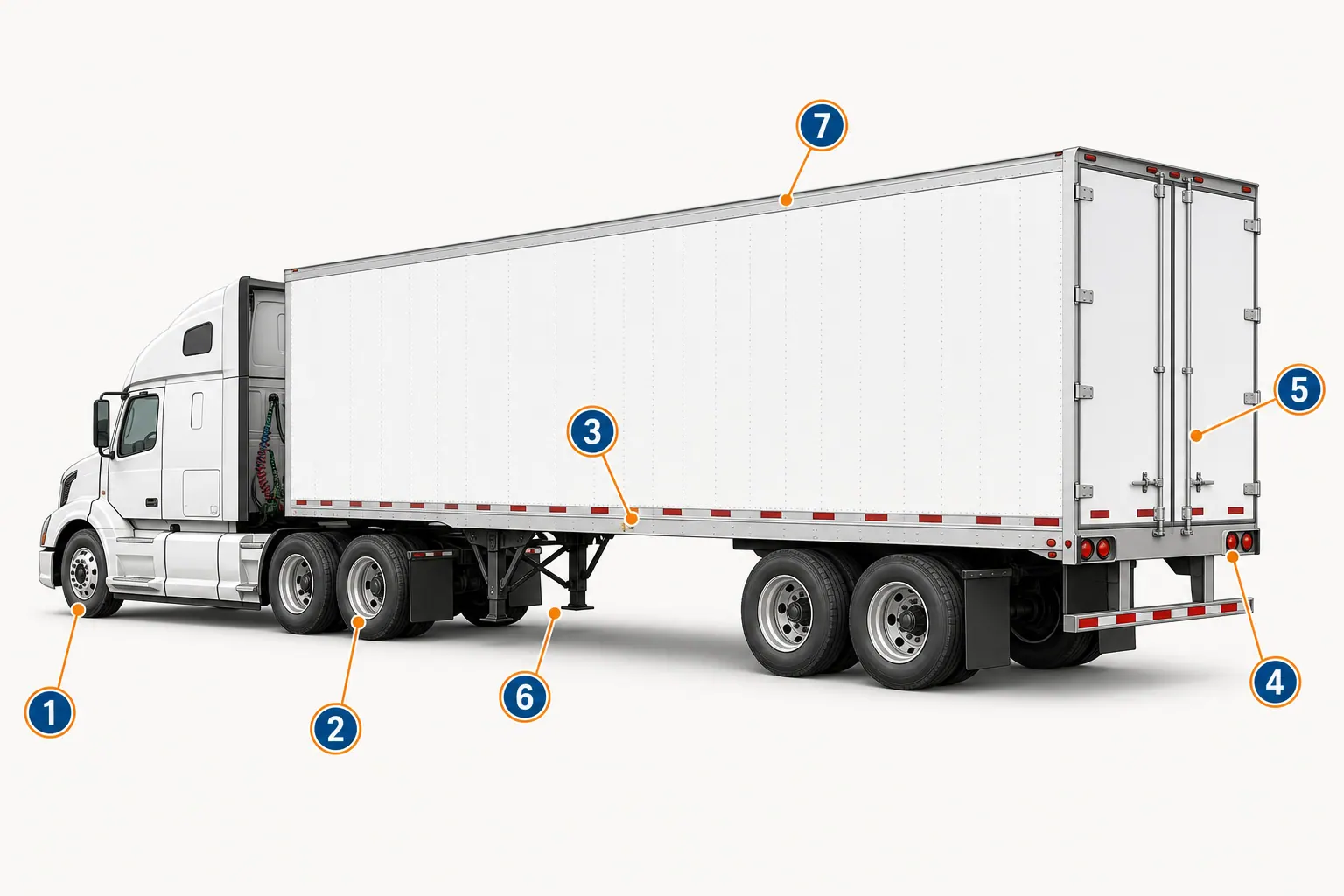
A dry van has a large rectangular box-like shape.
Most modern trailers have lightweight aluminum or composite exterior panels supported by a frame. Inside, drivers will typically see a long open cargo space with wood or other heavy-duty flooring.
At the rear of the trailer are usually two large swing doors.
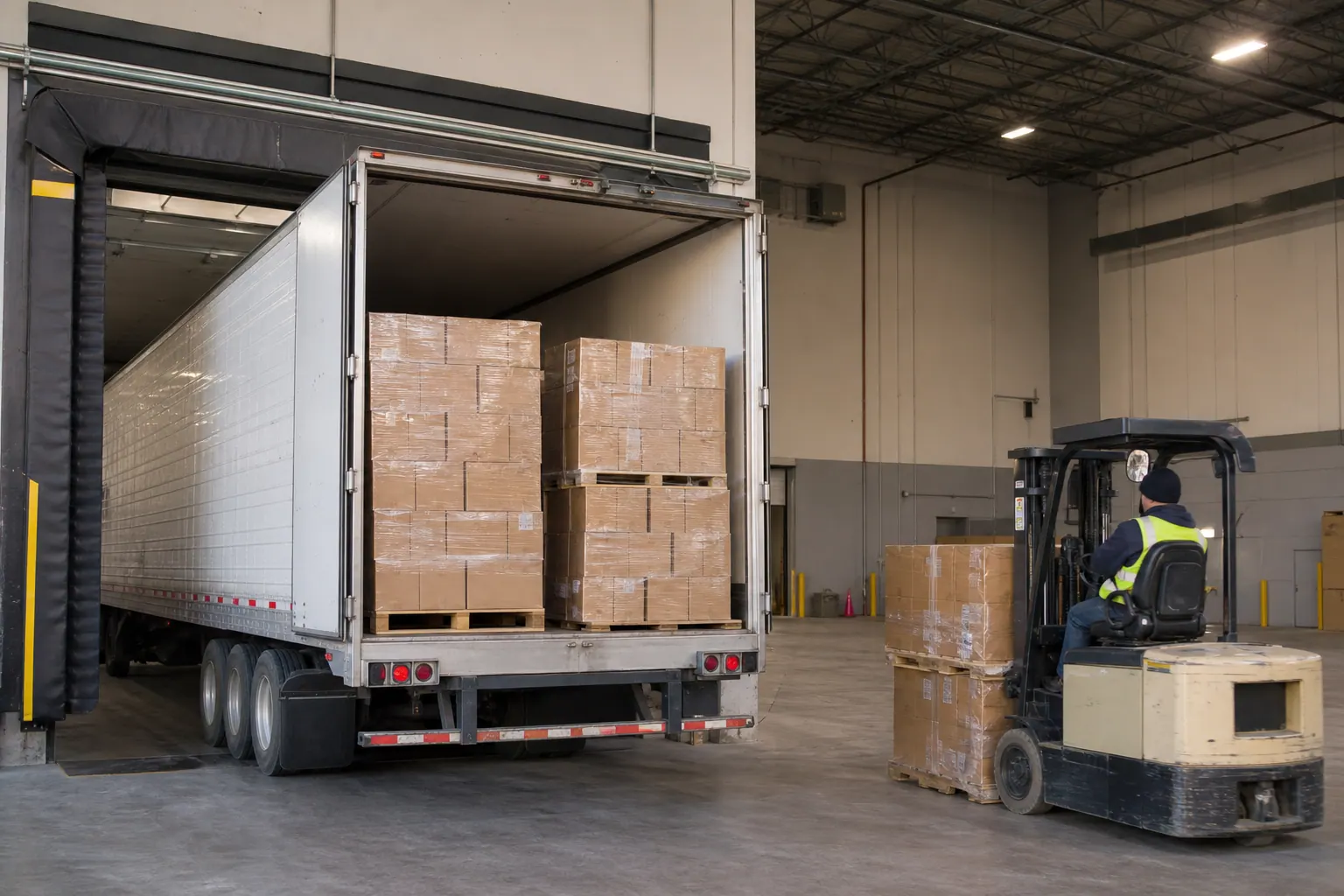
These doors open to allow forklifts and pallet jacks to load or unload freight while the trailer is backed into a loading dock.
Some trailers may have different door designs, interior logistics systems, or specialized features depending on the carrier and customer.
How Big Is a Dry Van Trailer?
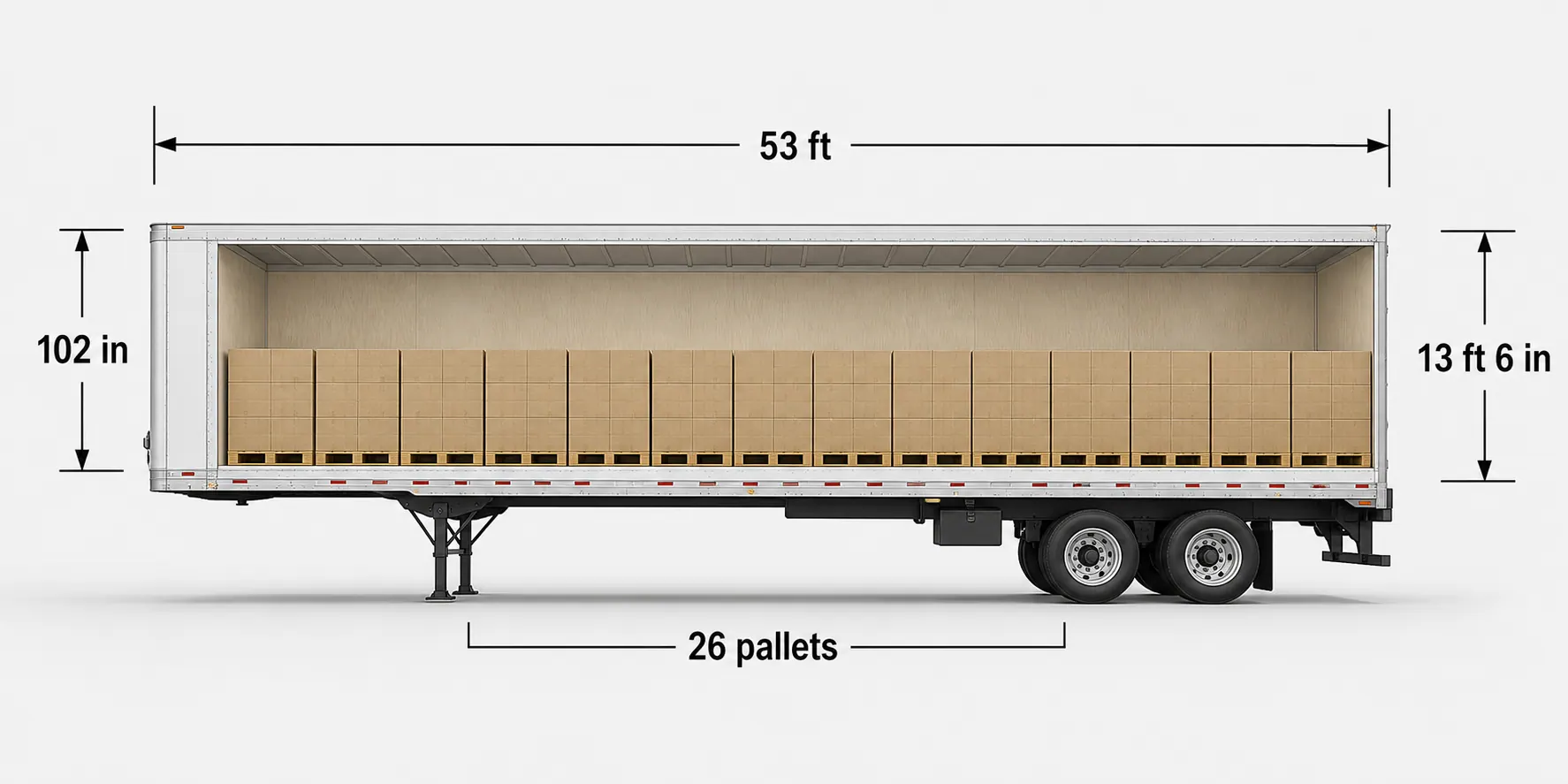
Dry van trailers are available in several sizes, but the 53-foot trailer is one of the standard choices for full truckload freight in the United States. 48-foot trailers are also used, while shorter trailers are common in certain local, regional, and LTL operations.
A typical modern dry van may be approximately:
- 53 feet long
- 102 inches wide externally
- Around 13 feet 6 inches in overall trailer height, depending on the trailer and equipment
- Capable of carrying roughly 42,000–45,000 pounds of cargo in many typical tractor-trailer configurations
Exact payload capacity depends on the weight of the tractor, trailer, fuel, equipment, cargo distribution, axle limits, and applicable regulations.
Federal rules generally establish a 102-inch width limit on the National Network, although vehicle dimensions and operating requirements can also be affected by state regulations.
A 53-foot dry van can commonly accommodate about 26 standard 48-by-40-inch pallets when loaded in a standard side-by-side arrangement, although the actual number depends on pallet dimensions and how the freight is positioned.
What Kind of Freight Goes in a Dry Van?
One of the biggest advantages of a dry van is versatility.
If freight fits inside the trailer and does not require refrigeration or another specialized transportation system, there is a good chance it can be transported in a dry van.
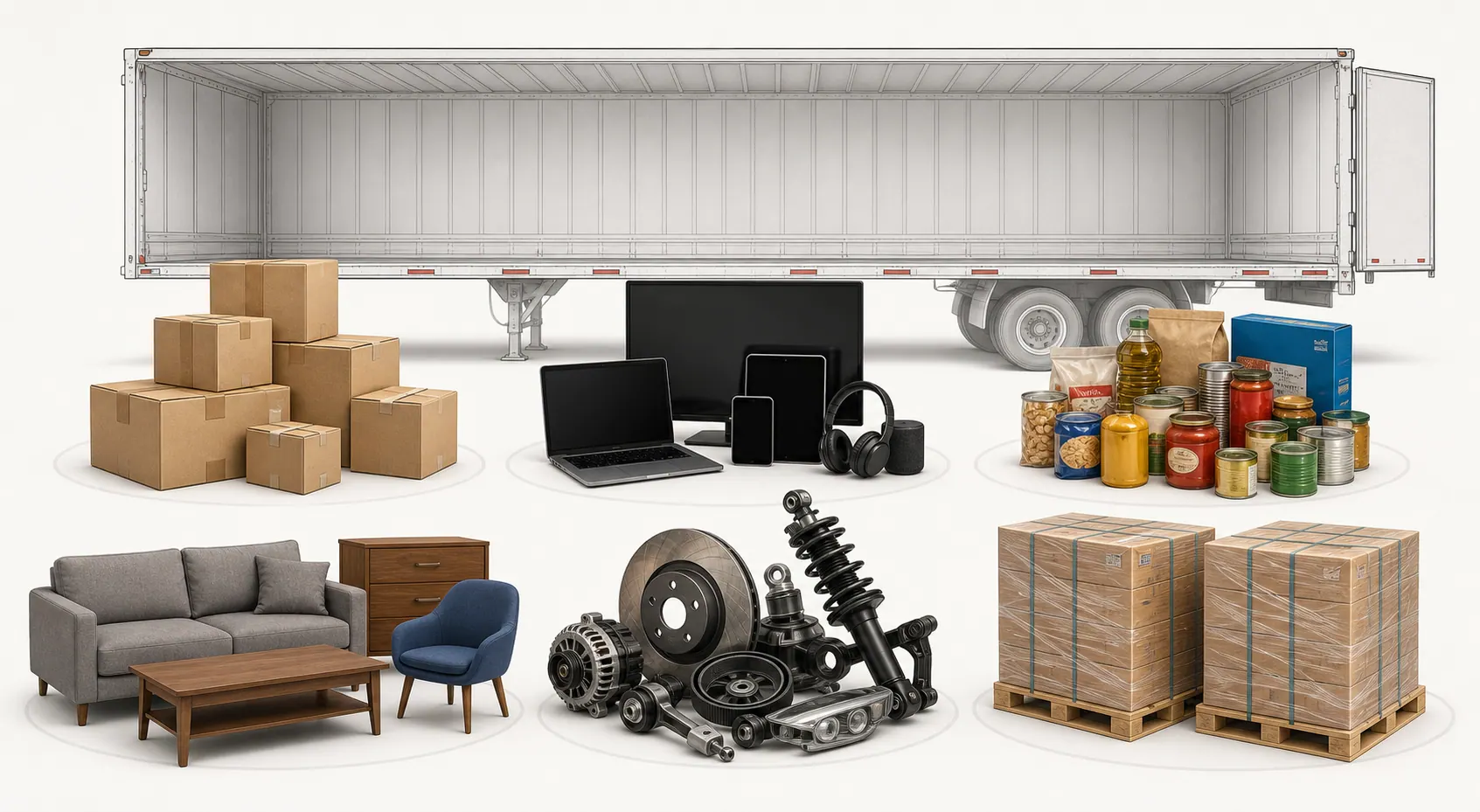
Common dry van freight includes:
Retail Products
Dry vans frequently transport merchandise between manufacturers, distribution centers, and retail stores.
Examples include:
- Clothing
- Shoes
- Toys
- Sporting goods
- Household products
- Office supplies
Electronics
Computers, televisions, appliances, and other electronics can be transported inside dry vans because the enclosed trailer protects them from rain and road debris.
Cargo still needs to be properly packaged and secured to prevent damage during transportation.
Packaged Food
Many foods that do not require refrigeration can travel in dry vans.
Examples may include:
- Canned food
- Dry pasta
- Cereal
- Snacks
- Packaged beverages
- Other shelf-stable products
Temperature-sensitive food generally requires different equipment.
Furniture
Furniture, mattresses, cabinets, and similar products are commonly transported in enclosed trailers because they need protection from weather.
Automotive Parts
Manufacturers and suppliers use dry vans to move many types of automotive components between factories, warehouses, and distribution centers.
Industrial Products
Dry vans can also transport:
- Machinery components
- Tools
- Plastic products
- Paper products
- Building materials
- Manufacturing supplies
This wide range of potential cargo is one reason dry van trucking is such a large part of the freight industry.
How Is a Dry Van Trailer Loaded?
Most dry van trailers are loaded from the rear.
The driver backs the trailer toward a warehouse dock until the rear of the trailer is positioned correctly against the loading area.
Warehouse workers can then load cargo using equipment such as:
- Forklifts
- Pallet jacks
- Conveyors
- Hand trucks
Freight may be palletized, boxed, or loaded in other configurations.
One important difference between a dry van and a flatbed is that dry vans usually cannot be loaded from the side or top.
If cargo is too large to fit through the rear doors, another trailer type may be required.
How Is Cargo Secured Inside a Dry Van?
Just because freight is inside an enclosed trailer does not mean it can simply be placed on the floor and driven away.
Cargo must be properly secured.
During acceleration, braking, turning, or emergency maneuvers, unsecured freight can move inside the trailer.
Depending on the load, cargo securement equipment may include:
- Load bars
- Straps
- Logistic tracks
- Shoring beams
- Blocking and bracing
- Air bags or inflatable dunnage
- Other cargo-control equipment
Drivers should inspect the load when required and make sure cargo is distributed and secured appropriately before beginning a trip.
Improper cargo securement can damage freight and can also affect the stability and handling of the truck.
Why Are Dry Van Trailers So Popular?
Dry vans provide several important advantages for carriers, drivers, and shippers.
1. They Can Carry Many Types of Freight
A carrier does not need a different trailer for every ordinary shipment.
The same dry van might carry retail merchandise on one load and manufacturing supplies on the next.
2. Cargo Is Protected From Weather
The trailer's walls and roof protect freight from:
- Rain
- Snow
- Wind
- Direct sunlight
- Road spray
- Dirt and debris
This makes a dry van suitable for products that would be damaged if transported on an exposed trailer.
3. Cargo Is More Secure
Once the doors are closed and secured, cargo is not openly exposed.
Seals and locks may also be used depending on the shipper, carrier, and type of freight.
4. Loading Docks Are Designed for Them
Warehouses and distribution centers across the country are commonly designed around enclosed trailers.
A driver can back into a dock and the warehouse can load or unload freight directly.
5. Dry Van Loads Are Widely Available
Because so many industries use enclosed trailers, dry van freight can be found throughout the country.
For new CDL drivers, this means dry van trucking is one of the most common entry points into the industry.
What Are the Disadvantages of a Dry Van Trailer?
Dry vans are versatile, but they cannot carry every type of freight.
No Temperature Control
A standard dry van does not have refrigeration.
That makes it unsuitable for freight requiring controlled temperatures.
Products such as frozen food, certain fresh produce, and temperature-sensitive pharmaceuticals may require a reefer trailer.
Limited Loading Options
Most dry vans are loaded through the rear doors.
Large equipment that needs to be loaded using a crane or from the side may require a flatbed or another open-deck trailer.
Interior Space Is Limited
Cargo must fit inside the trailer and through its doors.
Oversized freight usually cannot be transported in a standard dry van.
Trailer Condition Matters
Leaks or damage to the roof, walls, doors, or floor can expose freight to moisture or other problems.
Drivers should therefore inspect the trailer carefully before accepting a load.
Dry Van vs. Reefer Trailer
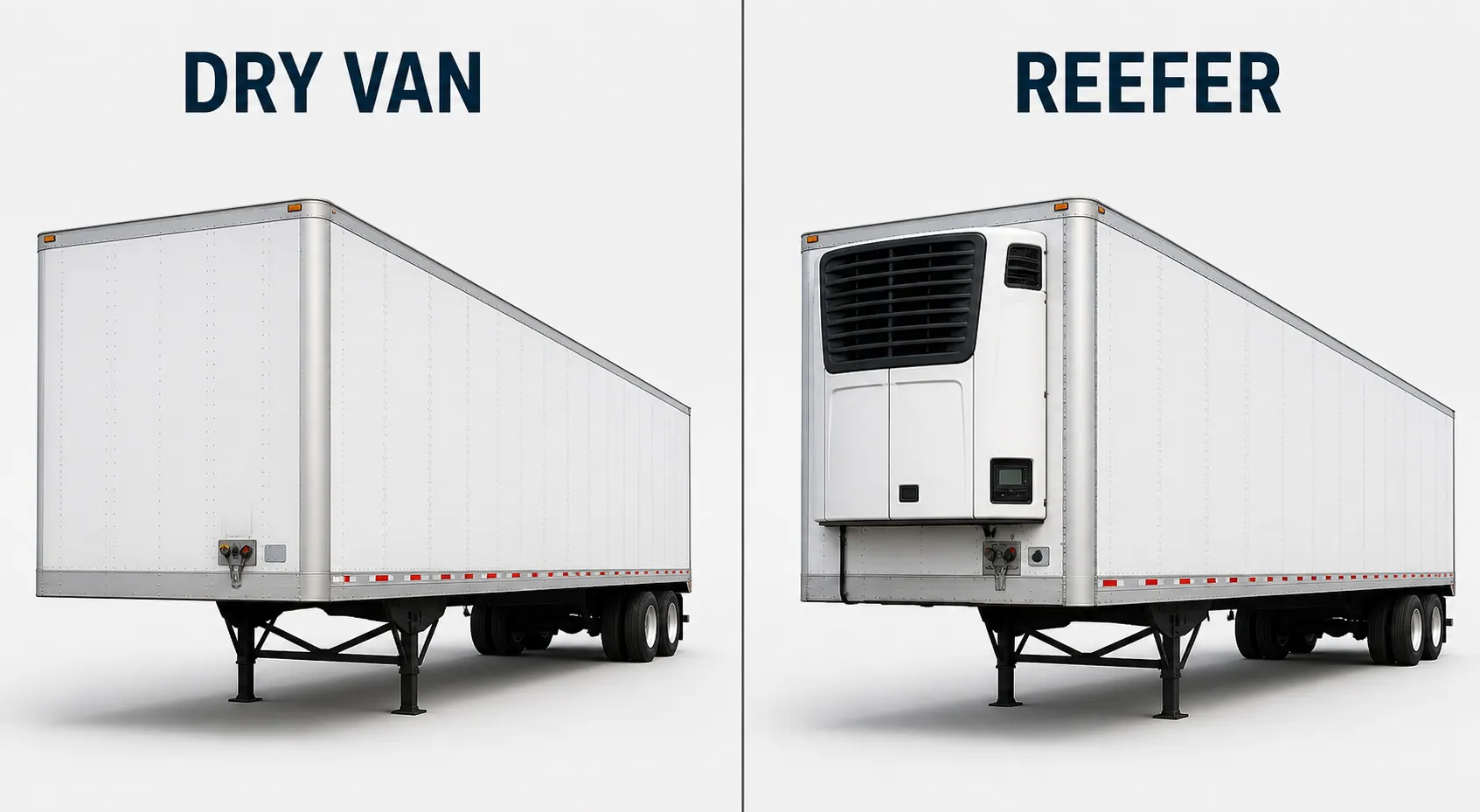
Dry vans and refrigerated trailers look similar from the outside, but they serve different purposes.
A dry van:
- Does not have a refrigeration unit
- Is primarily used for non-temperature-sensitive freight
- Generally has a simpler trailer design
- Can offer more usable cargo space because refrigeration equipment and insulation are not needed
A reefer trailer:
- Has a refrigeration or temperature-control system
- Uses insulated walls
- Is designed for temperature-sensitive freight
- May transport frozen, chilled, or temperature-controlled products
Common reefer freight includes produce, meat, dairy products, frozen food, and other products that require controlled conditions.
Dry Van vs. Flatbed Trailer
A flatbed is very different from a dry van.
A dry van completely encloses cargo, while a flatbed has an open deck without permanent side walls or a roof.
Dry vans are usually better for:
- Boxed freight
- Palletized freight
- Consumer products
- Weather-sensitive cargo
Flatbeds are often better for:
- Construction materials
- Steel
- Lumber
- Large machinery
- Oversized equipment
- Cargo requiring crane loading
Flatbeds provide much more flexibility for loading from the sides, rear, or above.
However, flatbed drivers also have additional responsibilities involving cargo securement and, for many loads, tarping.
Dry Van vs. Box Truck
Dry vans should also not be confused with box trucks.
A dry van trailer is a separate semi-trailer connected to a tractor using a fifth wheel.
A box truck has the cargo box permanently attached to the truck chassis.
Box trucks are commonly used for:
- Local deliveries
- Moving services
- Furniture delivery
- Last-mile transportation
Dry van tractor-trailers are more commonly associated with larger freight shipments and long-distance transportation.
What Should Drivers Check During a Dry Van Pre-Trip Inspection?
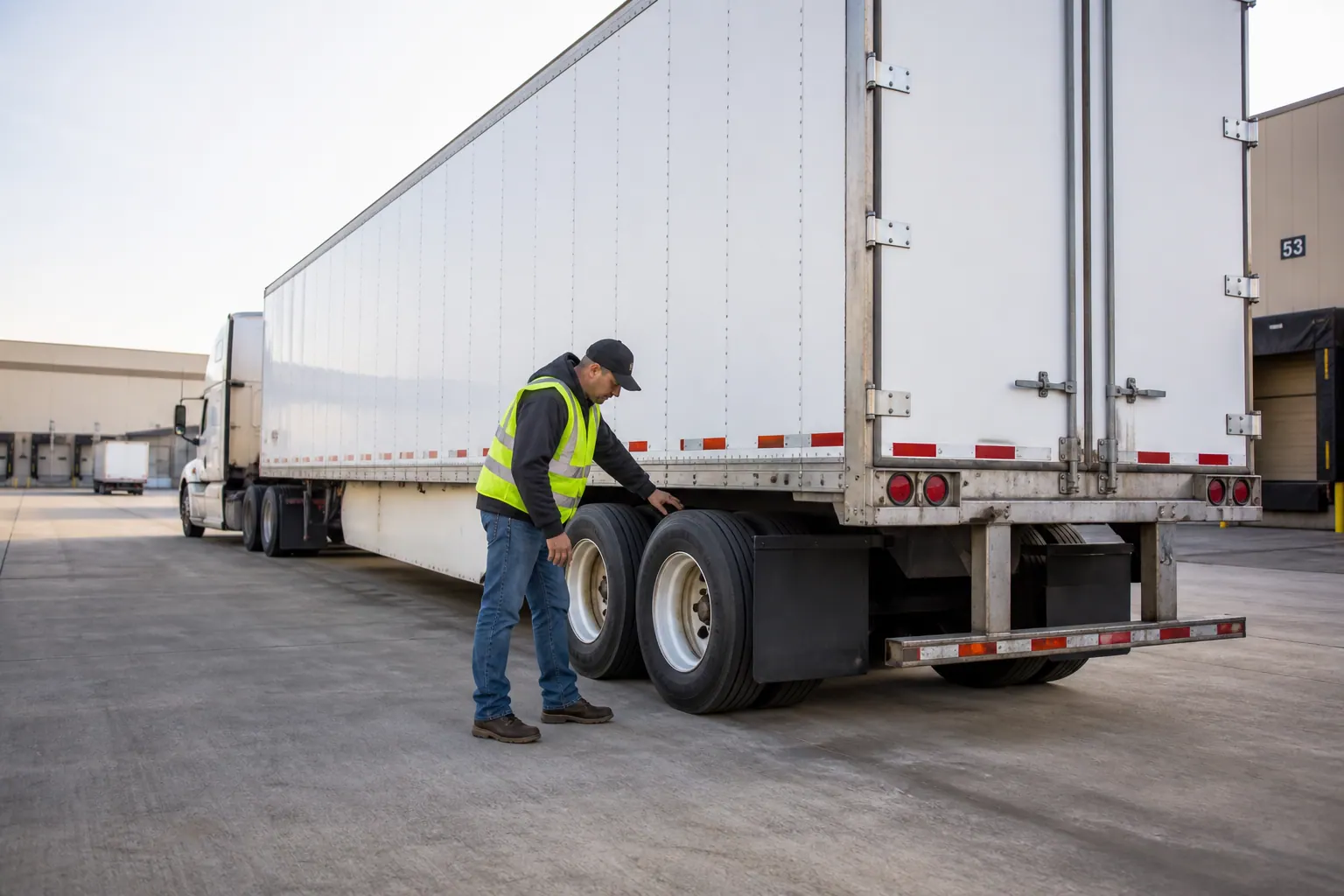
Drivers should inspect their trailers before operating them.
The exact inspection requirements depend on the vehicle and operation, but important dry van areas typically include:
Tires and Wheels
Check for:
- Tire damage
- Proper inflation
- Missing or damaged lug nuts
- Wheel damage
- Visible leaks around wheel hubs
Brakes
Inspect accessible brake components and look for obvious problems.
Lights and Reflectors
Make sure required lights and reflective equipment are clean, secure, and operational.
Trailer Doors
Check that:
- Doors close correctly
- Hinges are secure
- Latches function properly
- Door seals are in acceptable condition
Trailer Body
Look for:
- Holes
- Cracks
- Damaged panels
- Roof damage
- Signs of water leaks
Trailer Floor
The floor should be inspected for significant damage that could affect cargo or trailer safety.
Landing Gear
Check the landing gear assembly and make sure it is properly raised and secured before driving.
Coupling
Drivers should verify that the tractor and trailer are properly connected and that the fifth-wheel coupling is secure.
Is Dry Van Trucking Good for New Drivers?
Dry van trucking is often one of the most accessible areas of the trucking industry for new CDL drivers.
Many large trucking companies operate substantial dry van fleets and hire drivers for:
- Over-the-road routes
- Regional routes
- Dedicated routes
- Local positions
Dry van work can also allow new drivers to develop fundamental trucking skills without immediately dealing with some of the additional tasks required in specialized segments.
For example, drivers usually do not have to manage refrigeration temperatures as they would with reefer freight, and they generally perform less external cargo securement than flatbed drivers.
However, dry van driving still requires strong skills in:
- Backing
- Docking
- Trip planning
- Vehicle inspections
- Cargo awareness
- Weight distribution
- Hours-of-service management
- Safe highway driving
Do You Need a Special CDL Endorsement for a Dry Van?
There is no special "dry van endorsement."
A driver operating a typical tractor-trailer dry van combination will normally need the appropriate CDL — commonly a Class A CDL for standard tractor-trailer operations.
Whether additional endorsements are required depends on the actual freight and operation rather than simply the fact that the trailer is a dry van.
For example, transporting certain hazardous materials can require a Hazmat endorsement and additional regulatory requirements.
How Much Weight Can a Dry Van Carry?
There is no single payload number that applies to every dry van.
A common practical payload range for a 53-foot dry van is roughly 42,000 to 45,000 pounds, although some combinations may differ.
Drivers must consider the entire vehicle combination rather than only cargo weight.
Important factors include:
- Tractor weight
- Trailer weight
- Fuel
- Driver and equipment
- Cargo weight
- Steer axle weight
- Drive axle weight
- Trailer tandem weight
- Cargo position
A shipment may be below the total gross-weight limit and still be incorrectly loaded if too much weight is placed on an individual axle group.
This is why drivers regularly use truck scales when hauling heavy loads.
What Is a Drop-and-Hook Dry Van Load?
One term dry van drivers frequently hear is drop and hook.
With a drop-and-hook load, the driver arrives at a facility, disconnects from one trailer, and connects to another trailer that is already loaded or ready for transportation.
This can be faster than live loading, where the driver remains attached to the trailer while warehouse employees load or unload it.
Large distribution centers and dedicated trucking operations frequently use drop-and-hook systems to improve equipment utilization and reduce driver waiting time.
What Is a Live Load?
A live load means the driver arrives with the trailer and waits while it is being loaded.
A live unload works the same way at the receiver: the driver waits while employees remove the freight.
Wait times can vary considerably depending on the facility, appointment schedule, cargo, and warehouse workload.
Understanding the difference between drop-and-hook and live-load freight is important because it can have a major impact on a driver's daily schedule.
Who Uses Dry Van Trailers?
Dry vans are used throughout the American supply chain.
Customers can include:
- Retailers
- Manufacturers
- Grocery distributors
- E-commerce companies
- Automotive companies
- Furniture manufacturers
- Warehouses
- Construction suppliers
- Distribution centers
This variety gives dry van carriers access to many different freight markets and lanes.
Final Thoughts
The dry van trailer is one of the most important and versatile trailer types in American trucking.
Its enclosed design protects cargo from weather and road conditions, while its large interior allows it to transport a wide range of products.
A typical dry van can carry everything from consumer goods and electronics to packaged food, furniture, automotive components, and industrial materials.
For truck drivers, dry van trucking can also be an excellent introduction to the industry. It offers exposure to loading docks, distribution centers, long-haul routes, regional freight, drop-and-hook operations, and many of the fundamental skills required in professional trucking.
Dry vans cannot handle every shipment. Refrigerated products may require reefers, while oversized equipment may require flatbeds or other specialized trailers.
But for general freight that needs to stay secure, enclosed, and dry, the dry van remains one of the industry's most practical solutions.